
TV Mounting
TV Mounting Safety in Older Texas Homes: A Granbury Homeowner's Guide
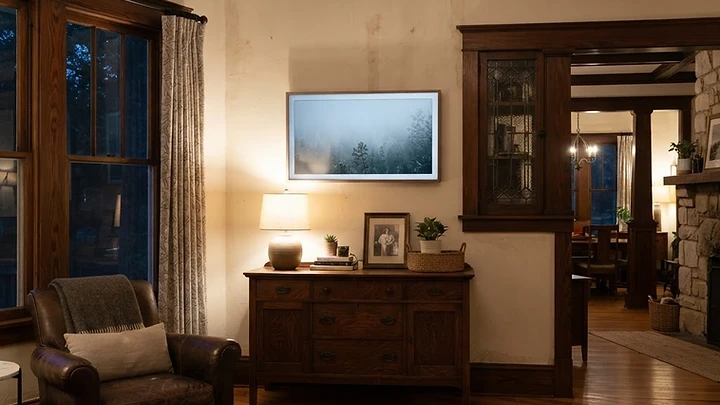
Granbury has some of the best-looking old walls in North Texas. Walk the square and you're surrounded by limestone and brick that was standing before anyone ever wired it for electricity. A few blocks out, you'll find 1950s and '60s ranch homes, lake houses with stone accent walls, and additions built onto originals in three different decades.
Those walls are a big part of why people love these homes. They're also why a TV that takes twenty minutes to mount in a new build can turn into a physics problem in an older one.
We mount TVs in old houses all week — Granbury, Weatherford, and everywhere between — and the safety rules are different from what most people expect. Here's what actually matters.
Why Older Walls Are a Different Job
Three things set a pre-1980s wall apart from new drywall:
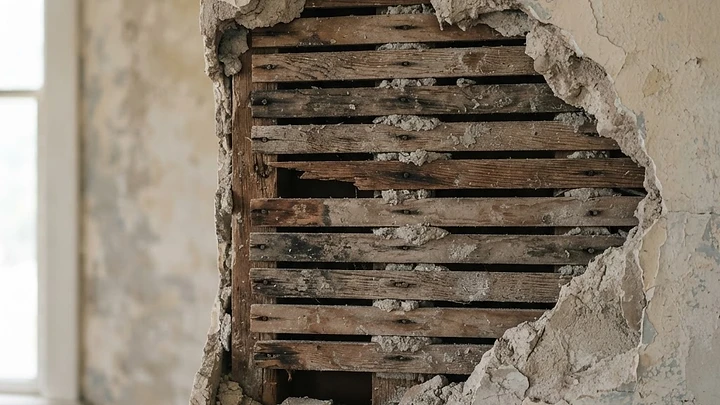
Plaster instead of drywall. Older homes near the square and throughout Granbury's established neighborhoods often have plaster over wood lath — narrow strips nailed across the studs, with wet plaster squeezed through and built up in layers. It's beautiful, it lasts a century, and it's brittle. It cracks instead of flexing, and a cheap plastic anchor that would hold fine in drywall can tear a crumbling chunk right out of a plaster wall.
Inconsistent framing. A modern wall has a stud every 16 inches, like clockwork. Older framing follows no calendar. Studs sit 12, 18, sometimes 24 inches apart. Rooms get reframed during remodels. And some masonry walls have no studs at all — just furring strips, or nothing but rock.
Surprises in the wall. Decades of electrical, plumbing, and remodel work leave layers behind. We've opened walls to find abandoned wiring, old gas lines, a drain pipe sitting exactly where the mount was supposed to go — and once, a hornet nest the size of a football. None of it shows up on a stud finder.
Tip 1: Know What's Behind the Wall Before the Drill Comes Out
This is the whole ballgame in an older home.
A standard electronic stud finder gets confused by plaster and lath — the lath strips read as studs across the whole wall, so you get false positives everywhere. A magnetic finder (or a strong magnet on a string) is more honest in old houses: it finds the nails and screws in the lath and the studs, because those are the only magnetic things in the wall. We cover the full method in how to find a stud before mounting a TV.
Before drilling, look at what's on the wall and floor near your spot. Outlets, switches, light fixtures, and plumbing fixtures all mean wires or pipes in the wall — usually running straight up or straight over from them. A $20 non-contact voltage detector is cheap peace of mind.
And if you open a small pilot hole and see cloth-wrapped wiring, stop and call an electrician. Old insulation gets brittle, and drilling through it is the one mistake in this whole article you can't undo.

Tip 2: Anchor to the Structure, Never to the Surface
A TV never hangs from plaster. A TV hangs from the framing behind it — the plaster is just the finish.
That means the mount's lag screws go into real studs whenever the layout allows. When the studs don't land where the TV needs to be, the honest options are rated metal anchors sized to the TV and mount weight, adding blocking between studs, or moving the TV. Plastic sleeve anchors from a junk drawer are not on the list. (We lay out the whole weight-vs-hardware question in hanging heavy items on drywall with studs, and the general rules by wall type in can you mount a TV on any wall.)
Brick, stone, and block get their own treatment — masonry anchors into the mortar or the brick itself, never into crumbly mortar joints. The full walkthrough is in mounting a TV on a stone or brick wall.
Tip 3: Work Gently — Old Plaster Cracks, It Doesn't Bend
Plaster forgives nothing. Every hole starts as a crack if you rush it:
- Put a piece of painter's tape over your mark before drilling — it keeps the surface from chipping at the edges.
- Use a sharp bit at low speed. Let the drill do the work; pushing hard spreads cracks outward from the hole.
- Drill the hole slightly smaller than the anchor, and stop as soon as you're through.
- Never overtighten into plaster. Snug, not crushed — cranking a screw crushes the plaster "keys" behind the wall, and a month later you have a crack running to the ceiling.
If a crack starts, stop and reassess before you make it worse. Hairline cracks happen; growing ones mean the plaster around the hole has let go.
Tip 4: Match the Mount to the Wall's Weak Spots
A full-motion arm that swings the TV two feet off the wall multiplies the leverage on every anchor in the wall. On a marginal older wall — thin furring strips, questionable plaster, soft masonry — a fixed or tilt mount spreads the load straight down into the structure and is the safer choice. (We break down the trade-offs in fixed, tilt, or full-motion: choosing a TV mount.)
And remember that the TV's weight on the box is just the start — the mount adds weight, and leverage multiplies it. The failure pattern of skipping this math is always the same, and it's never pretty: why TVs fall off walls.
Tip 5: Treat Old Wiring Like It's Live — Because It Might Be
Running cables inside an older wall is riskier than in new construction, because you can't assume you know what's in there. If you want the clean look of in-wall cable routing, it can absolutely be done right — carefully, after checking the cavity — but in many older Granbury homes a paintable raceway or a simple cord cover on the surface is the safer, saner choice. (Here's our guide to hiding TV cables in the wall, including when we'd tell you not to.)
One more: never leave a heavy old wall cavity as a place for loose cable connections. Old homes have enough electrical stories already.
Tip 6: Check the Wall Again After a Few Weeks
Old houses move. Seasonal swings, settling soil, and decades-old framing mean the wall that held perfectly on install day can tell you something new a month later. Do a five-minute check after the first few weeks:
- Mount still tight against the wall, no gaps?
- No new cracks radiating from any hole?
- TV still level, no sag on one side?
A quarter-turn on a lag screw today is a five-minute fix. A TV that's been slowly working loose for six months is a floor casualty waiting for football season. It's also worth childproofing the whole setup if kids or pets are in the house.
The Granbury Angle
Every old wall in this town has a history, and the walls near the square are the veterans. The limestone and brick homes around downtown Granbury tend toward masonry and plaster — the two wall types that punish shortcuts the hardest. The ranch homes in the older neighborhoods are usually wood-framed with plaster or early drywall, which is friendlier — if the studs cooperate. And the lake houses bring their own personality: stone accent walls, big open great rooms where a TV at the wrong height looks lost, and humidity that every material in the room responds to.
We've mounted TVs in all of them, and the pattern holds everywhere: the older the wall, the more the job is about reading the wall before touching it.
When to Bring in a Stud Instead
None of this is meant to scare you off a DIY Saturday — if your wall is wood-framed, the studs land reasonably, and you take it slow, a homeowner can do a safe mount. But if you're looking at plaster over masonry, a stone fireplace, a wall that's been patched and repatched, or you'd simply rather watch the game than fight with a hammer drill — that's the job we show up for, family-tested and backed by the mistakes we've already made so you don't have to.
The Bottom Line
Older Texas walls are worth the extra care — they've already outlasted every TV that's ever been hung on them. Read the wall first, anchor to structure, and don't ask brittle plaster to do framing's job.
Ready to have it done right the first time? Get a quote or read more about our TV mounting in Granbury, Texas.
A Couple Studs
A family-run TV mounting and wall hanging business serving Granbury and Weatherford, Texas. One Stud Teaching the Next — every job teaches the next generation the value of doing it right.
Get a QuoteReady to Hang It the Right Way?
A Couple Studs serves Granbury and Weatherford, Texas — get your free quote.
Got a wall? We've got a Stud.
Get your free quote from A Couple Studs — professional TV mounting and wall hanging in Granbury and Weatherford, Texas.